The PixLab Tilemap Editor Now Exports to Godot, Unity and Phaser

The PixLab Tilemap Editor is a free tool for painting 2D game levels in your browser. You pick tiles from a tileset, paint them on a grid in layers, and export the result. We just gave it a thorough update: game engine export, a redesigned workspace, new tools, safer saving and a long list of fixes.

What hasn't changed: it's still free, there is still no account, and your projects still never leave your browser.

Open the editor · Read the feature tour
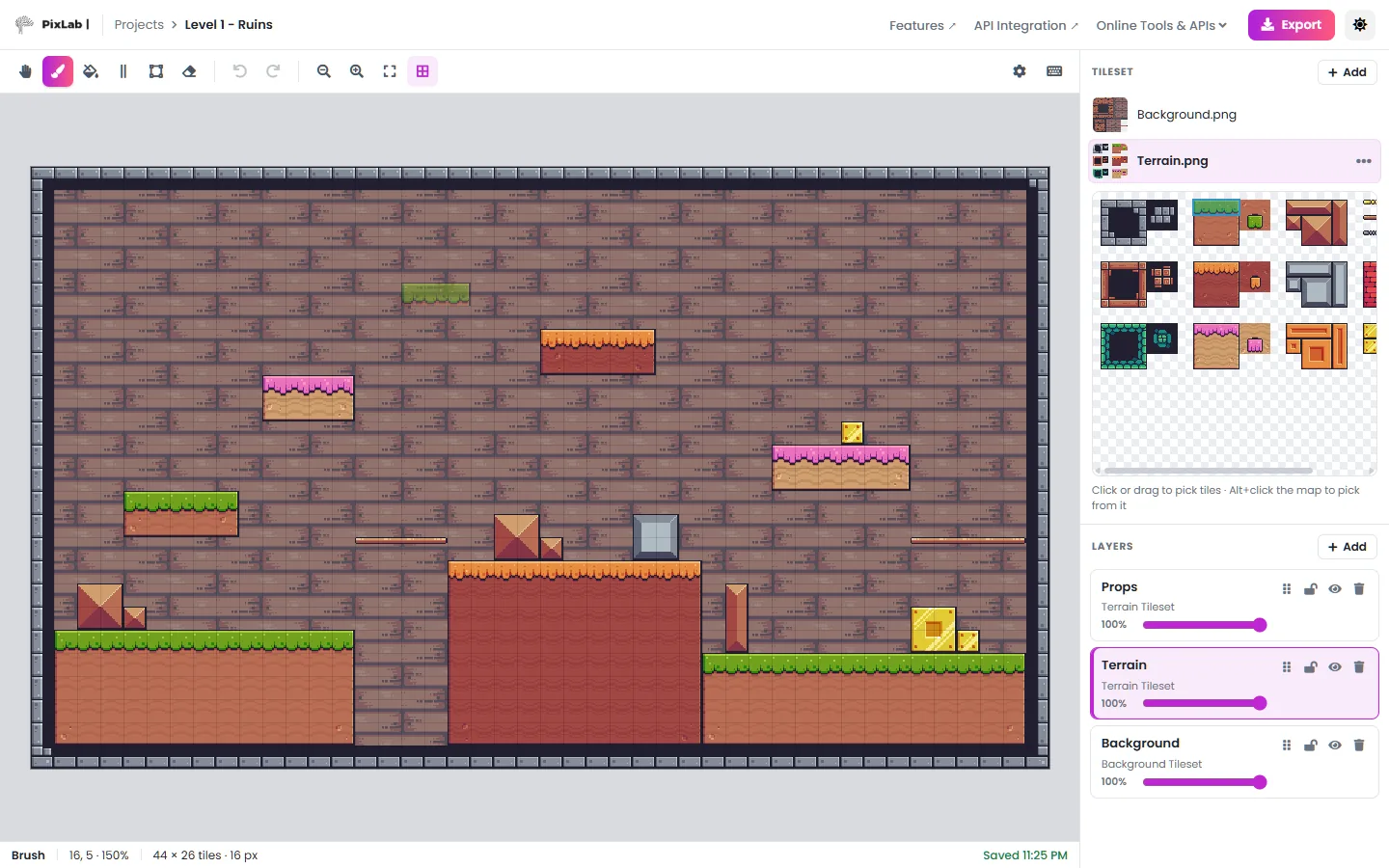
The redesigned PixLab tilemap editor, with a pixel-art level on the canvas and the tileset and layers panels on the right

Export your level to a game engine

Until now, the editor exported a PNG or JPG image, or its own JSON format. Getting a level into an engine meant writing your own importer.

The new Export → Game engine / Tiled map option downloads a .zip with your map in the two formats of the Tiled map editor: .tmx (XML) and .tmj (JSON). The zip also holds the tileset images, one CSV file per layer, and a README with import steps. Most 2D engines and frameworks can read Tiled maps, either natively or with a free plugin:

  • Godot 4: install the free YATI add-on, then add the .tmx or .tmj file and the tileset images to your project. The map is imported as a scene with tile map layers.
  • Unity: install SuperTiled2Unity and copy the .tmx file and the tileset images into your Assets folder. The map becomes a prefab built from Unity Tilemaps.
  • Phaser: load the .tmj file with this.load.tilemapTiledJSON(), add the tileset image, and create one layer per map layer.
  • Unreal Engine: Paper2D can import Tiled JSON maps once you rename the .tmj file to .json. Its importer is old and doesn't support every Tiled feature, so check the result.
  • libGDX, MonoGame, Bevy and other frameworks with a Tiled loader read the .tmx file.
  • Tiled opens the .tmx file directly, so you can keep editing there or convert the map to the other formats Tiled exports, such as GameMaker and Defold.

We checked the exported files with two independent Tiled parsers. The editor doesn't import .tmx files, though: to continue a project in PixLab, keep its JSON backup.

A new workspace

The editor page has a new design, with the same controls in a cleaner layout:

  • A slim header shows where you are ("Projects › your project name"). Double-click the name to rename the project. A single Export button groups the image, game engine and backup exports.
  • The map fills the window. Tools sit in a compact toolbar: painting tools, undo and redo, then the view controls.
  • A status bar under the map shows the current tool, the cell under your pointer, the zoom level, the map size and whether your work is saved.
  • The sidebar has a Tileset panel, with your tilesets and the tile picker on a transparency checkerboard, and a Layers panel.
  • Light and dark themes are both redone.

The home page got the same treatment. Your projects now appear as cards with a preview of the map and when you last edited it (older projects get their preview after their next edit). The New Project dialog lets you set the tile size and the map size before you start.

New tools

  • Rectangle tool (R): drag to fill an area with the selected tiles.
  • Eyedropper: Alt+click the map to pick a tile you already placed.
  • Multi-tile stamps: drag across the tileset to select a block of tiles, such as a tree or a house, and stamp it in one click.
  • Zoom and pan: zoom with the buttons, Ctrl+wheel, a trackpad pinch or the + and - keys. Fit the whole map with 0. Pan with Space+drag, the middle mouse button or the Pan tool. Fixed zoom levels keep pixel art crisp.
  • Grid toggle (G), remembered between visits.
  • Map size: maps are no longer tied to the size of your browser window. Set the size in tiles, up to 500 × 500, and change it later from the cog button.
  • Tile sizes from 1 to 256 px, saved with each project.
  • Tileset margin and spacing, for sprite sheets with gaps between tiles. The picker, the map and both exports use them.
  • Keyboard shortcuts for every tool. Press ? in the editor to see the list.
  • Undo and redo, up to 75 steps.

Safer saving

Projects used to be saved in localStorage, which browsers limit to about 5 MB per site. They now use IndexedDB, which holds much larger projects. Saving is also lighter: a brush stroke no longer rewrites your tileset images. Existing projects are moved over automatically on your first visit.

Saving is also more careful:

  • If a save fails, for example because browser storage is full, the editor tells you and offers to download a backup. Before, it failed silently.
  • If the same project is open in two tabs, you get a warning, and closing the older tab no longer overwrites the newer save.
  • Export → JSON (project backup) saves the whole project, tileset images included. Import it on the home page to restore it in any browser or on another computer.
  • You can duplicate a project to try a variation.
  • The home page shows how much storage your projects use.

Your projects are stored only in your browser, and Safari can delete site data after 7 days without a visit. Keep a JSON backup of anything important.

Fixes

Among the bugs fixed in this update:

  • The brush no longer keeps painting after you release the mouse outside the map.
  • The grid and the fill tool are now correct on high-resolution screens and at 125% or 150% display scaling.
  • The default tile size is now 16 px, matching the built-in tilesets.
  • The "Drag-n-drop your image here" pop-up no longer appears every time you open a project.
  • Painting with a tileset that doesn't belong to the current layer now offers to create a new layer, instead of doing nothing.
  • The eraser works without picking a tile first.
  • Selecting tiles by dragging right-to-left or bottom-to-top now selects the right area.
  • Project, layer and tileset names are always shown as plain text.

Lighter and faster

We removed a lot of code the editor no longer needed, including a 360 KB drawing library that was only used to size the canvas. Even with all the new features, the editor page now loads about a quarter less JavaScript and CSS than before. The libraries it relies on are updated to current versions, and fonts are served from our own site, so the home page makes no requests to third-party servers.

What's next

A few ideas we're looking at: flipping and rotating tiles, per-tile properties such as "solid" (exported as Tiled tile properties), and offline use. If there's something you'd like to see, let us know.

Try it

The editor is free and needs no sign-up. Open it at tilemap.pixlab.io, pick a built-in tileset or import your own, and start painting. For a full overview of the features and the engine export, see the 2D level editor page on pixlab.io.
Announcing PixLab Forensic: Free AI Content Detection with EXIF and GPS Photo Analysis

AI-generated photos and videos now look real enough to fool most people. A fake image can spread on social media in minutes, and a convincing deepfake video can damage a reputation or support a scam. Telling real content from fake has become a daily need, not only for journalists.

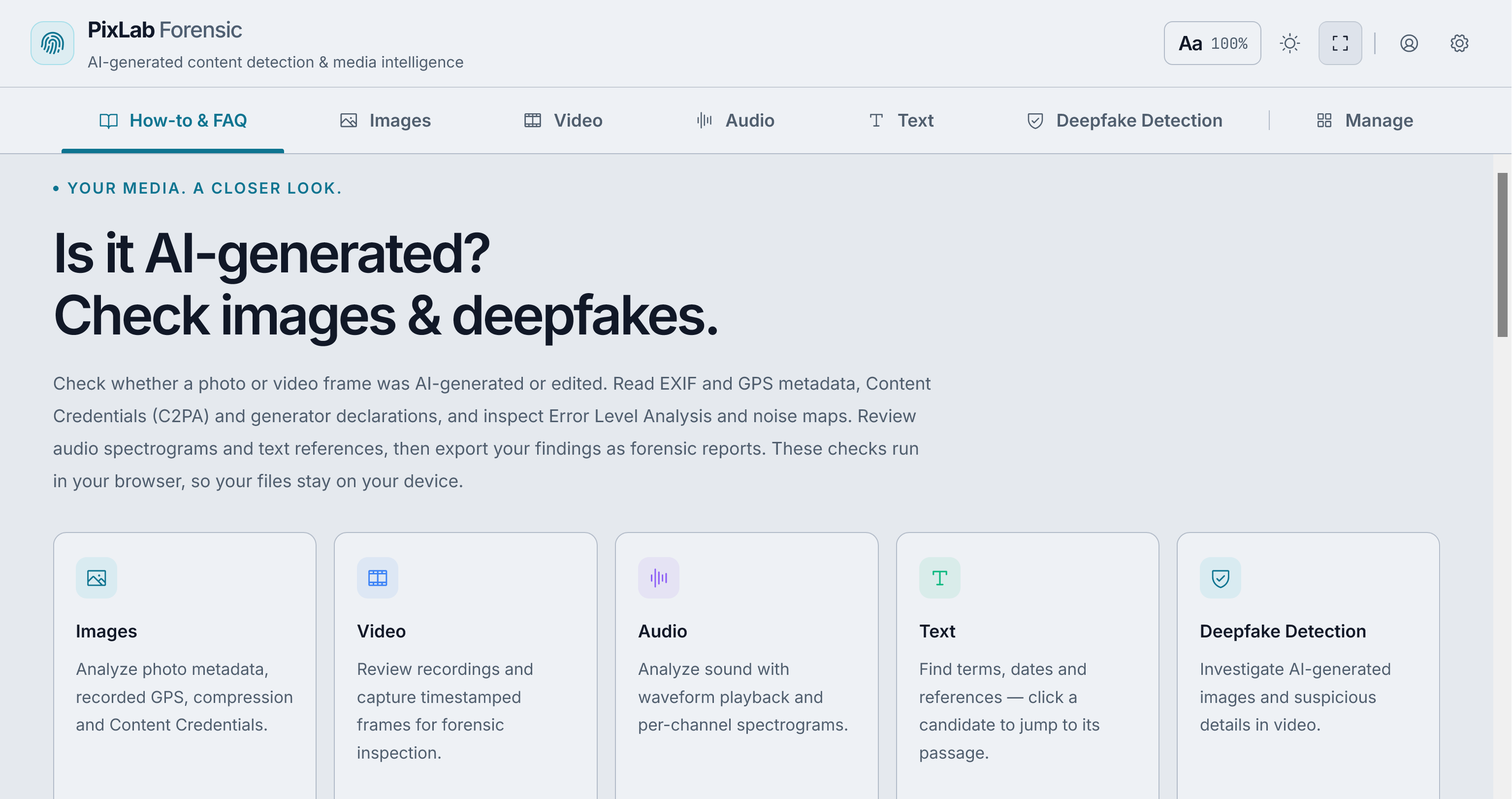
Today we are making PixLab Forensic free for everyone. It is a browser-based tool that helps you check whether a photo or video is AI-generated, edited or authentic, and shows you the evidence behind the answer. There is nothing to install, and most features work without an account.

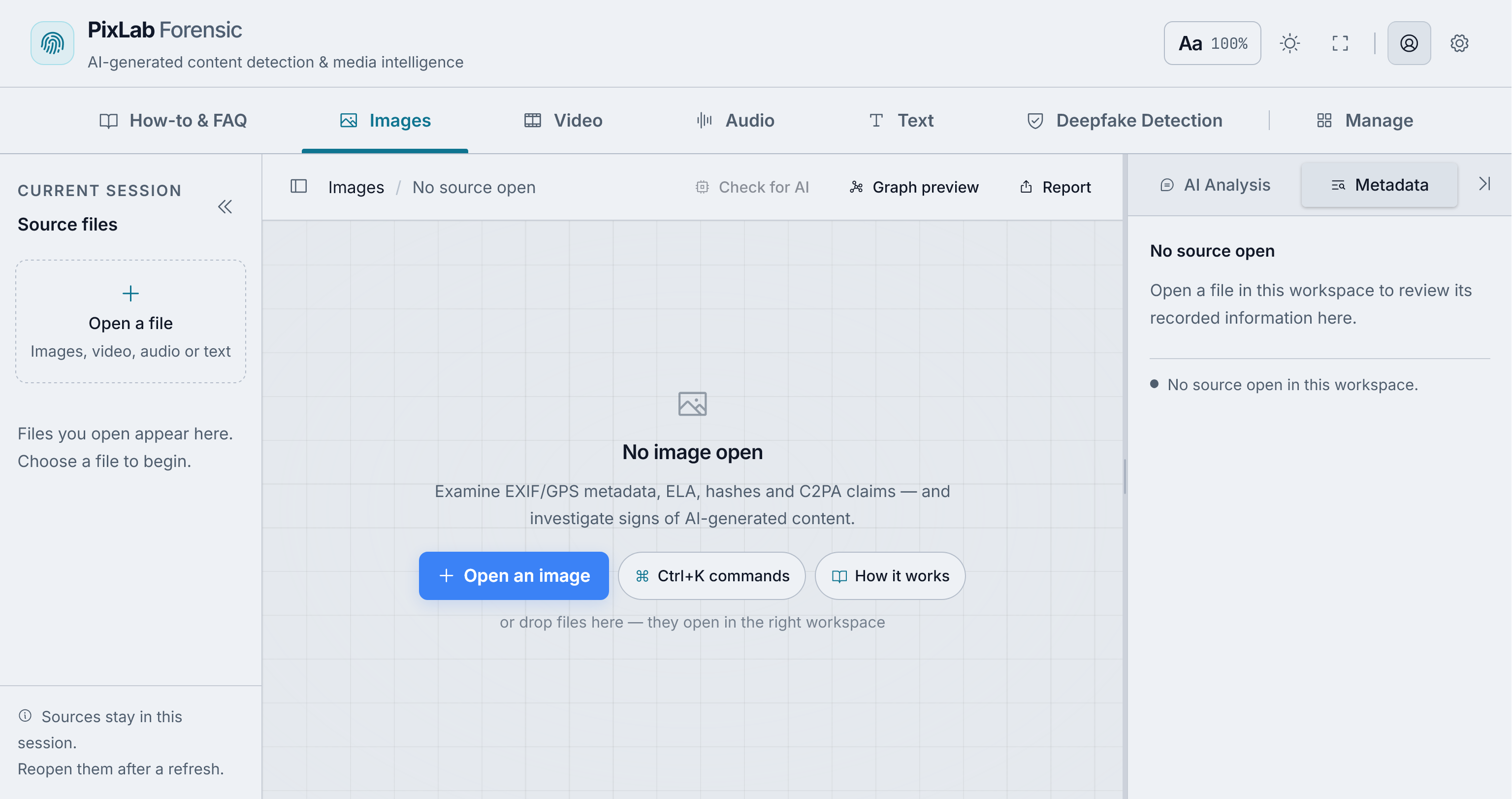
landing page

Try PixLab Forensic for free

What is PixLab Forensic?

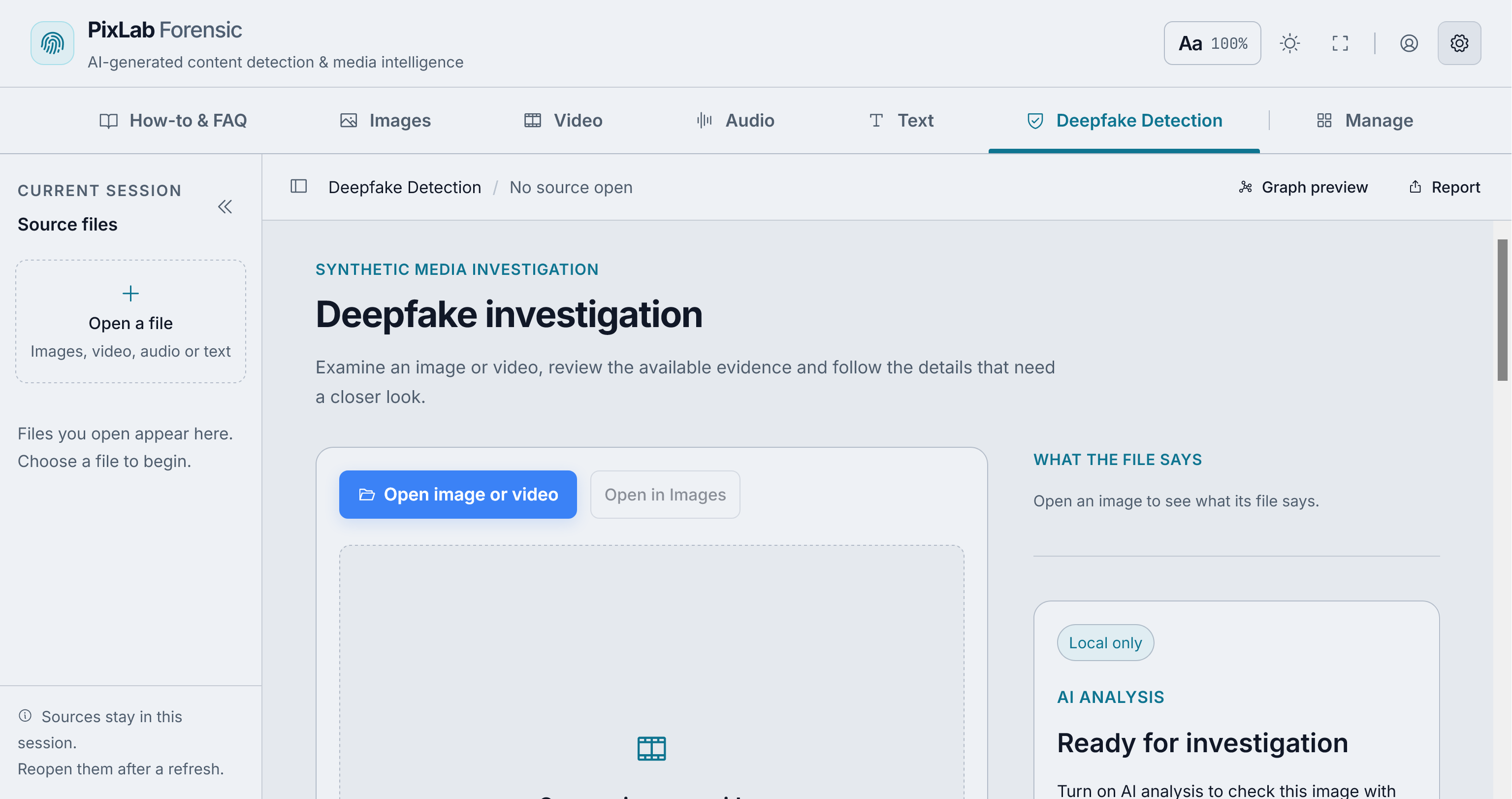
PixLab Forensic brings several verification tools into one place. You open a photo, video, audio file or text in your browser, and it shows you what the file contains and where it may have been changed. For photos and video frames, an optional AI check estimates whether the content was generated by AI.

It is built for people who need a reliable answer, such as journalists, fact-checkers, researchers, investigators, moderators and anyone who wants to check content before sharing it.

What you can do with PixLab Forensic

  • Detect AI-generated images. Run the AI check on a photo to see whether it was likely created by an AI image generator. The result comes with an explanation and the signals the detector found.
  • Spot deepfakes in videos. Pause a video on the moment you want to check, capture that frame and run the AI check on it.
  • See hidden photo data (EXIF). Most photos carry information you cannot see: the camera or phone model, the date it was taken, the editing software used and sometimes the GPS location. PixLab Forensic reads this data and shows the location on a map.
  • Check Content Credentials. Some images include a digital label, also called C2PA, that records how they were made. It can show that an image came from an AI tool such as Adobe Firefly, and whether the label was signed.
  • Find edited areas. Error Level Analysis (ELA) and noise maps highlight parts of a photo that were saved differently from the rest, which can point to editing.
  • Find copies and known files. Each file gets a digital fingerprint, so you can spot exact copies and similar-looking images, or compare files against a list of known images.
  • Review audio and text. Listen closely to recordings with a waveform and frequency view, and search text for links, emails and dates.
  • Save and share your findings. Keep your files and notes in a project and export a report as a PDF or data file.

How to check if a photo is AI-generated

content-check

  1. Go to forensic.pixlab.io and open the photo in Deepfake Detection. The local checks start right away, and the photo stays on your device.
  2. Read the list under "What the file says". It shows clues found inside the file, such as an AI label in the Content Credentials, the editing software used, or a preview image that no longer matches the photo.
  3. For a second opinion, choose Check for AI. You will be asked to turn on AI analysis and sign in with a free PixLab account the first time.
  4. Compare the AI result with the clues from the file and with other sources before you decide.

How to check a video for deepfakes

enter image description here

  1. Open the video in Deepfake Detection or in the Video tab.
  2. Play it and pause on a frame where the face or scene looks suspicious.
  3. Capture the frame and choose Check for AI.
  4. Repeat for other key moments. Each result applies only to the frame you checked, not to the whole video.

Deepfake detection powered by FACEIO technology

PixLab Forensic does not start from zero. Its deepfake detector is borrowed from FACEIO Meeting Shield, our Chrome extension that warns users about deepfake and fake video during live calls on Google Meet, Zoom, Microsoft Teams and Webex.

It also uses the face anti-spoofing technology behind FACEIO face spoof protection, which helps FACEIO detect people trying to fool face login with printed photos, replayed videos, phone screens or masks.

The same technology now helps you check a single photo or video frame, together with the evidence stored in the file.

Your files stay on your device

Photos, videos and documents under review are often private. PixLab Forensic is designed with that in mind:

  • Reading photo data, GPS, Content Credentials, editing checks, video frames, audio and reports all run inside your browser. Opening a file does not upload it.
  • AI analysis and online maps are off by default. When you choose Check for AI, only the photo or frame you are checking is sent for analysis. For text, only a short excerpt is sent.
  • Saved projects stay in your browser, not on our servers.

What the results mean

No tool can prove with full certainty that a photo or video is real. Photo data can be edited or removed, and editing checks can react to normal saving and resizing. An AI check gives an estimate, not proof, and a result of "no AI generation detected" does not guarantee that a photo is unedited.

This is why PixLab Forensic shows each clue separately and explains its limits. You get the evidence, and you make the final decision.

Free to use

The browser tools are free, with no account and no installation. The optional AI check needs a free PixLab account, and plan limits may apply.

Frequently asked questions

Is PixLab Forensic free? Yes. All browser tools are free and work without an account. The optional AI check needs a free PixLab account, and plan limits may apply.

Do I need to install anything? No. PixLab Forensic runs in a modern web browser on a computer or phone.

Are my files uploaded? No. Opening a file does not send it anywhere. A photo, video frame or text excerpt is sent only when you choose an AI check.

Can it detect AI-written text? No. The Text tab helps you search a document and follow its links, emails and dates, but it does not detect whether text was written by AI.

Can it check a whole video for deepfakes? Not yet. Capture the frames you want to examine and check each one. Each result applies only to that frame.

Can it prove that a photo is real? No tool can do that alone. PixLab Forensic shows you the evidence in the file and an optional AI estimate, so you can reach a decision with other sources.

Learn more


Start checking photos and videos with PixLab Forensic →

Introducing PixLab's Image Deblur and Image Upscale APIs

Blurry product photos and low-resolution campaign assets can interrupt an otherwise automated publishing workflow. Today, PixLab is expanding its image-processing toolkit with two new REST endpoints: the Image Deblur API and the Image Upscale API.

Developers can now add photo deblurring, image enhancement, and 2x upscaling to applications used by marketing teams, ecommerce businesses, creative agencies, and publishers. Upload an image or submit its public URL, then incorporate the processed result into your existing workflow.

Both endpoints are available starting with the Starter plan. Get your API key from the PixLab Console or compare PixLab plans and pricing.

Image Deblur API: Reduce Motion Blur in Photos

DEBLUR API

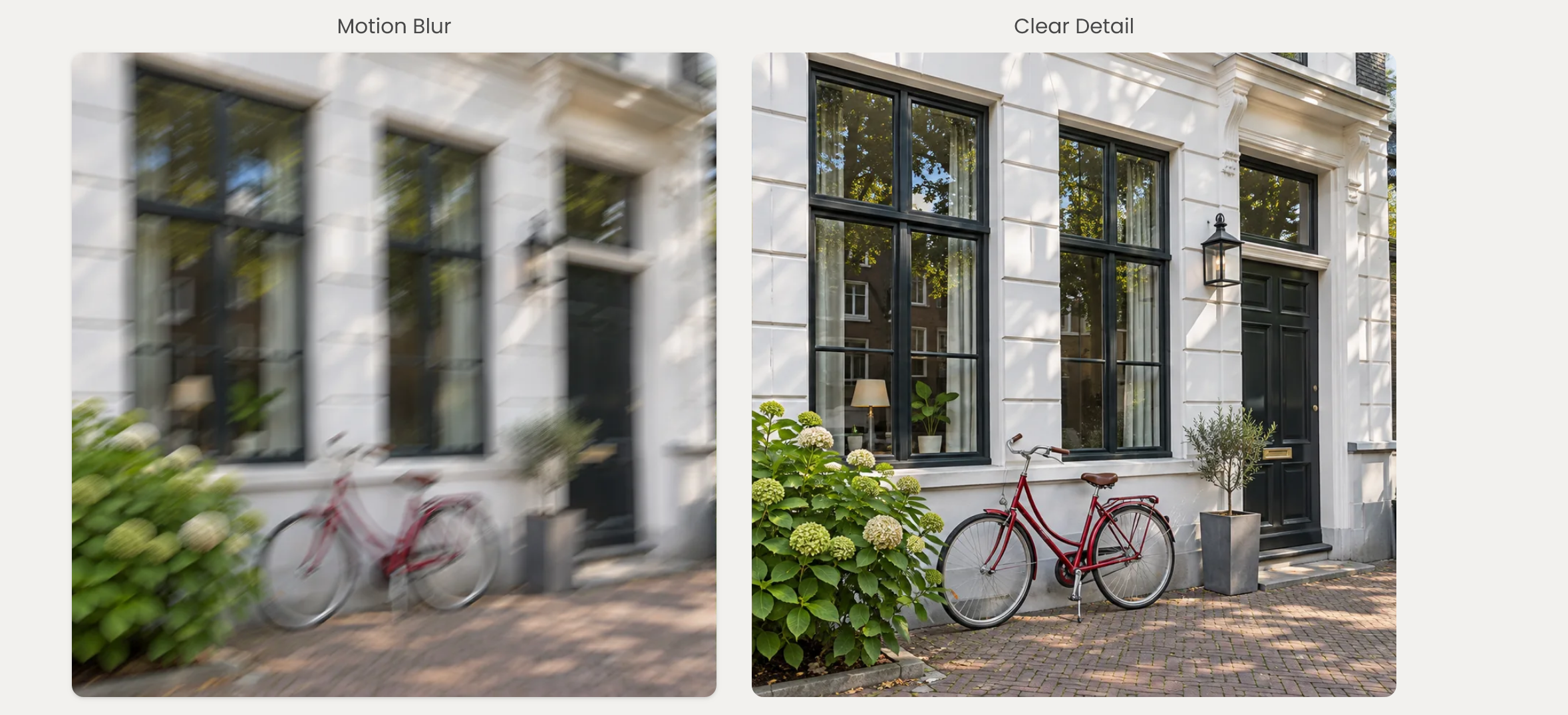
The PixLab Image Deblur API reduces motion blur and camera shake in photographs without changing their original dimensions. It is designed for workflows where a photo needs clearer detail, rather than a larger canvas.

Call the DEBLUR endpoint to process product photography, property listings, campaign images, or other photos in your application. No image mask, bounding box, or text prompt is required.

For marketing teams, this means adding a restoration step before reviewing event photography or lifestyle images for publication. Ecommerce platforms can apply the same process to blurred supplier photos, while real estate teams can prepare camera-shaken interior and exterior images for their listings.

Explore the Image Deblur API documentation and code examples for request parameters and integration details.

Image Upscale API: Enlarge Photos 2x or Enhance at Original Size

UPSCALE endpoint

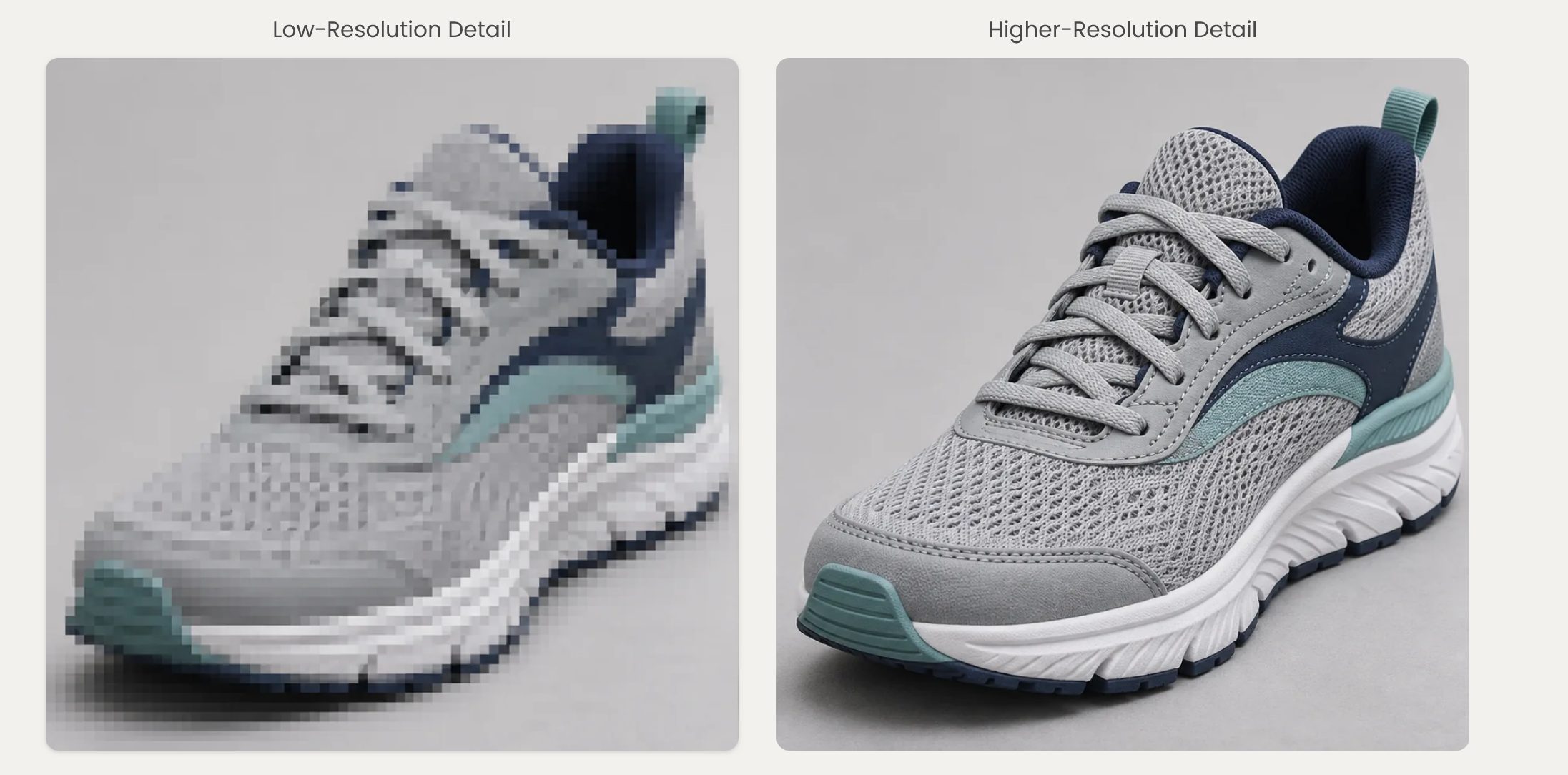
The PixLab Image Upscale API provides AI image enhancement and super-resolution through the UPSCALE endpoint.

  • 2x upscaling: double the image's width and height while preserving its aspect ratio. A 1000 by 750 pixel image becomes 2000 by 1500 pixels.
  • Original-size enhancement: use scale=1 to enhance an image without enlarging it.

The default scale=2 mode is useful when small product photos need to fit larger galleries or campaign layouts. Original-size enhancement is an alternative when your publishing workflow already has the dimensions it needs.

Unlike ordinary resizing, AI upscaling estimates additional detail from image patterns. It can create a clearer-looking enlargement, but it cannot guarantee recovery of information missing from the source.

See the Image Upscale API documentation for supported parameters, output options, and examples in Python, JavaScript, PHP, and Ruby.

Built for Marketing Teams, Ecommerce, and Creative Workflows

These endpoints fit into the systems your team already uses. Developers can integrate them into a product catalog, content management system, digital asset library, or custom photo-editing application.

  • Marketing teams: prepare photography for social media posts, email newsletters, landing pages, and campaign updates.
  • Ecommerce and marketplaces: process supplier and seller photos for product detail pages, catalog imports, and larger image galleries.
  • Creative agencies: add deblurring or enhancement to client asset preparation before design and approval.
  • Real estate and hospitality: improve the presentation of property and accommodation photos while retaining their proportions.
  • Publishers and SaaS platforms: integrate image restoration and enlargement into editorial, upload, and editing workflows.

For bulk processing, submit one image per request and distribute work through your existing queue. Keep concurrency within your account's rate limits, and review important assets before publication. Contact PixLab to discuss sustained high-volume requirements.

Extend Your Existing PixLab Image-Processing Workflow

Deblurring and upscaling complement PixLab's existing image-cleanup endpoints:

  • The Background Removal API isolates subjects and produces transparent cutouts for product listings, campaign compositions, and branded layouts.
  • The Text and Watermark Removal API removes captions, labels, timestamps, and permitted watermarks from images you own or are authorized to modify.

Use each endpoint independently, or combine only the operations a particular asset needs. For example, an ecommerce application might enlarge a small product photo, while a marketing workflow might remove an outdated authorized text overlay before preparing new campaign copy.

Available Starting with the Starter Plan

You do not need an Enterprise subscription to get started. Image Deblur and Image Upscale are available from the PixLab Starter plan, with usage subject to your plan's allowance and account limits.

Review the PixLab pricing page to choose the plan that fits your workload. You can manage your API key and monitor usage in the PixLab Console.

Start Building

  1. Sign in to the PixLab Console and get your API key.
  2. Choose the Image Deblur API for motion blur, or the Image Upscale API for enlargement and enhancement.
  3. Submit a representative image using a file upload or public URL.
  4. Compare the result with the original, then integrate the endpoint into your application.

Image quality still depends on the source. Severe blur, heavy compression, and missing detail can limit restoration. Keep original files and review product labels, faces, logos, and fine textures before publishing processed images.

Introducing the New FACEIO Website: Updated Docs, More Languages, and New Products

The new FACEIO website brings together updated developer documentation, localized pages, accessibility guidance, and dedicated product pages for facial authentication, Meeting Shield, and ID Match.

enter image description here

For website owners and businesses, it makes the options easier to understand. For developers, it provides a clearer path from creating a FACEIO application to integrating the fio.js JavaScript library and connecting authentication results to an existing backend.

Updated Documentation, From Your First Integration to Production

The documentation follows the work developers need to do: create an application, configure it, integrate the widget, and handle the results.

Start with Getting Started, our guide to a 5-minute facial authentication integration. It walks through creating an application in the FACEIO Console, obtaining its Public ID, reviewing the security and privacy settings, and adding fio.js to your website or web app.

Then use the Integration Guide for method parameters, return values, error codes, and framework examples. It covers enroll() for registering new users, authenticate() for returning users, and session handling with restartSession().

The Developer Center connects these resources with the references you need as your implementation grows:

  • Facial ID reference: understand the identifier returned after enrollment and how to associate it with your own user accounts.
  • REST API reference: manage Facial IDs and use the documented backend endpoints while keeping private API keys on your server.
  • Webhook documentation: receive enrollment, authentication, and Facial ID deletion events in your backend.
  • Security best practices: review PIN Code validation, liveness settings, domain restrictions, and the controls needed around your login flow.
  • Privacy best practices: plan notices, consent, retention, deletion, and recognition-engine deployment.

Already using FACEIO? Revisit these references before your next release, especially if you are adding webhooks, changing security settings, or updating account-deletion workflows.

Read FACEIO in Your Language

The website and developer documentation are now available in four localized versions alongside English:

Use the language selectors in the header or footer to move between equivalent pages. Technical names such as fio.js, Facial ID, API methods, and error constants remain unchanged so they stay consistent with the code you write.

Website localization is separate from the embedded experience: the FACEIO widget supports more than 70 languages, helping teams provide enrollment and authentication flows for users in different markets.

Facial Authentication for Websites, Web Apps, and Corporate Portals

FACEIO facial authentication remains the core of the platform. It lets users enroll and authenticate through a browser widget, using the device's camera without requiring a native mobile app or a dedicated biometric sensor.

Developers load fio.js, initialize it with the application's Public ID, and connect enrollment and authentication to their existing interface. The library works with Vanilla JavaScript, React, Vue, Next.js, and other JavaScript stacks.

Your backend keeps control of accounts, sessions, recovery, and authorization. FACEIO does not store, handle, or access biometric hashes; the selected facial recognition engine manages them. The updated documentation explains these responsibilities and the available cloud and PixLab Insight on-premises deployment options.

Meeting Shield: Video Risk Signals for Business Meetings

FACEIO Meeting Shield is a Chrome extension for supported Google Meet, Zoom Web, and Microsoft Teams Web sessions.

It analyzes visible meeting video and reports suspicious signals associated with deepfakes, synthetic video, replayed footage, and manipulated facial motion. Its local-first analysis is designed to avoid uploading raw meeting video.

Meeting Shield is intended for situations such as remote interviews, executive calls, financial consultations, and customer meetings. It gives teams additional information to review before sharing sensitive information or making a decision. These signals support the organization's verification process; they do not establish a participant's identity or guarantee that every manipulated video will be detected.

Visit the product page to review how the extension works and request access through the FACEIO Console.

ID Match: Compare a Live Selfie with an ID Portrait

FACEIO ID Match brings a guided selfie-to-ID comparison into your website or web app.

It uses the same application setup and fio.js integration pattern as facial authentication. Calling idmatch() opens a popup that captures a live selfie and an ID document, performs a liveness check, and compares the selfie with the portrait extracted from the document. Your application can also request selected document fields.

Document scanning, portrait extraction, and optional field extraction are powered by PixLab DOCSCAN. Submitted images and processing data are handled in RAM and deleted immediately after the result is ready or the session fails. The processing pipeline retains no submitted images, document data, or scan logs.

ID Match compares the two faces. It does not authenticate the document, perform KYC or AML checks, or decide whether to approve a user. Your application determines how to use the returned result and any requested fields.

Accessibility Is Part of the Integration

The updated website also explains the FACEIO widget's accessibility features: visual and audio instructions, keyboard navigation, and screen-reader support with compatible browsers and assistive technologies.

These features help guide users through enrollment and authentication. Before release, test the complete experience within your own website or web app and provide another way to access an account for users who cannot or do not want to use facial authentication.

Start with the New Guides

Whether you are adding passwordless face login to a customer website, integrating facial authentication into a corporate portal, or exploring Meeting Shield and ID Match, start with the product pages and updated documentation.

Open the FACEIO Console to create an application and obtain its Public ID, then follow the Getting Started guide to integrate fio.js.

For explanations and implementation articles, explore the FACEIO Knowledge Center. For public technical questions, join the FACEIO Community Forum.

Think-Act Desktop Agent Is Now Publicly Available for Download

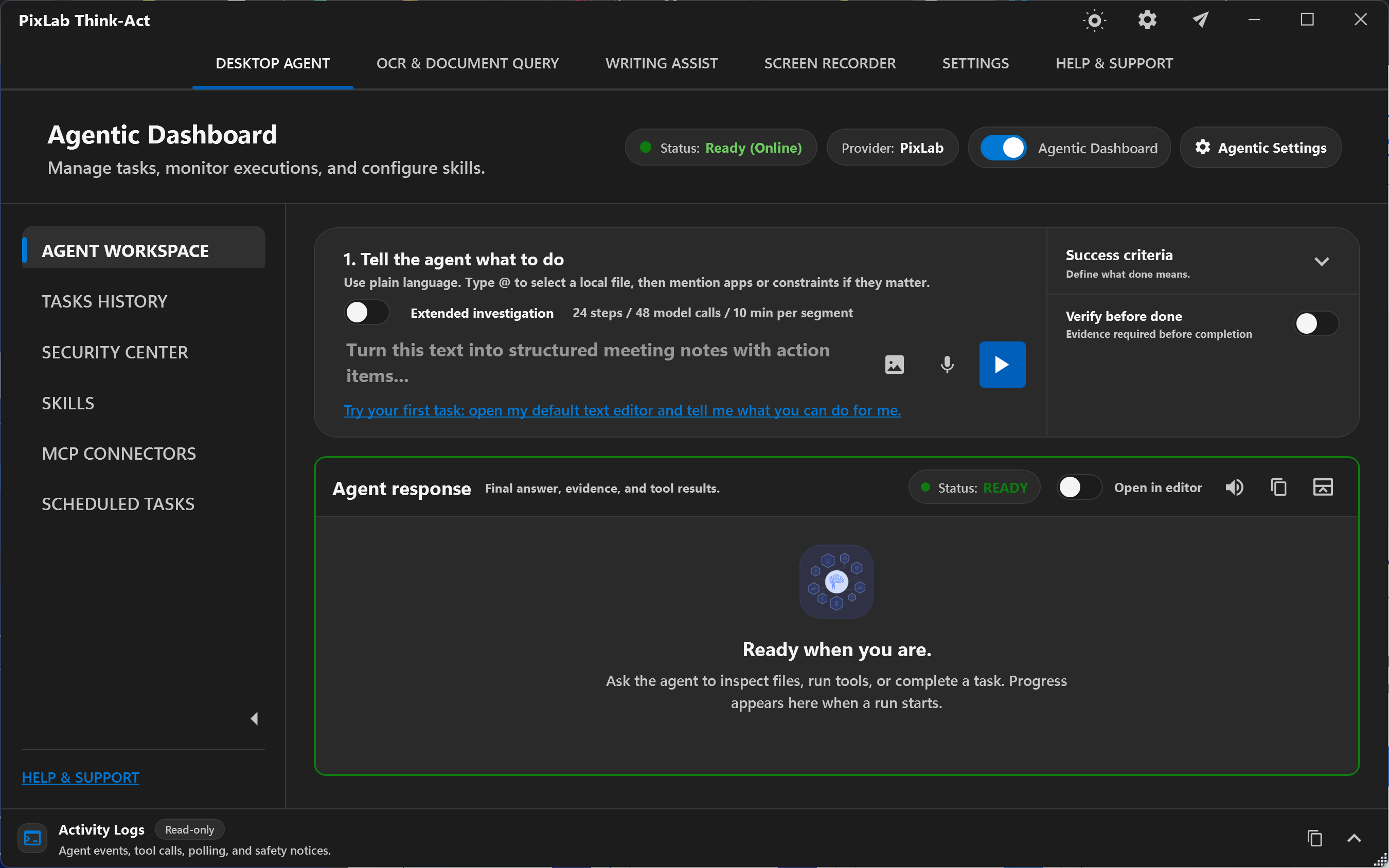
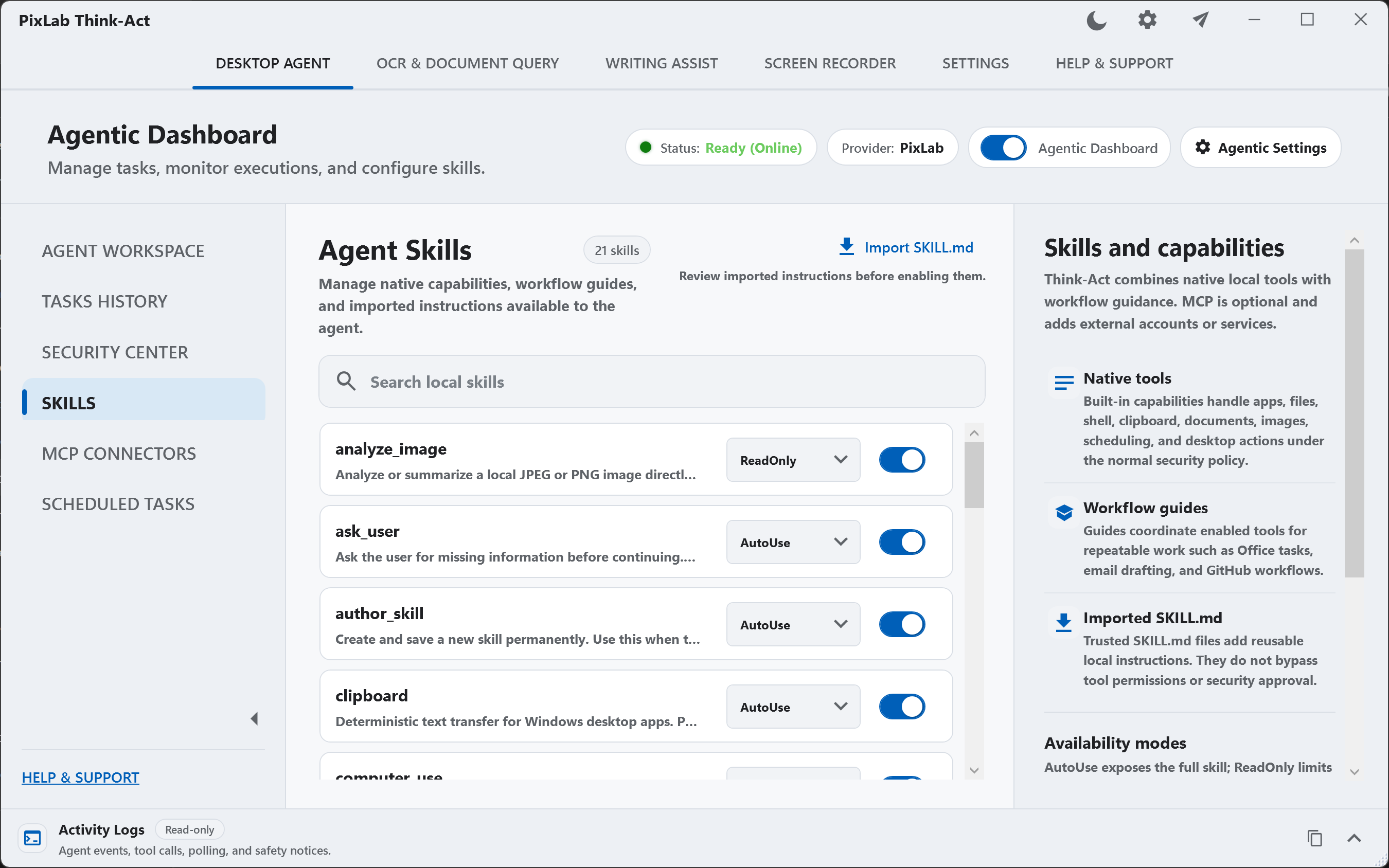
Think-Act light theme

Meet PixLab's Agentic AI Desktop Workspace

We are pleased to announce the release of Think-Act for Windows, our new agentic AI desktop workspace built to bring AI directly into everyday desktop workflows.

Think-Act is available now for 64-bit Windows 10 and Windows 11 with an upcoming release to Mac Silicon in first quarter of 2027 and can be downloaded directly from PixLab or Microsoft Store.

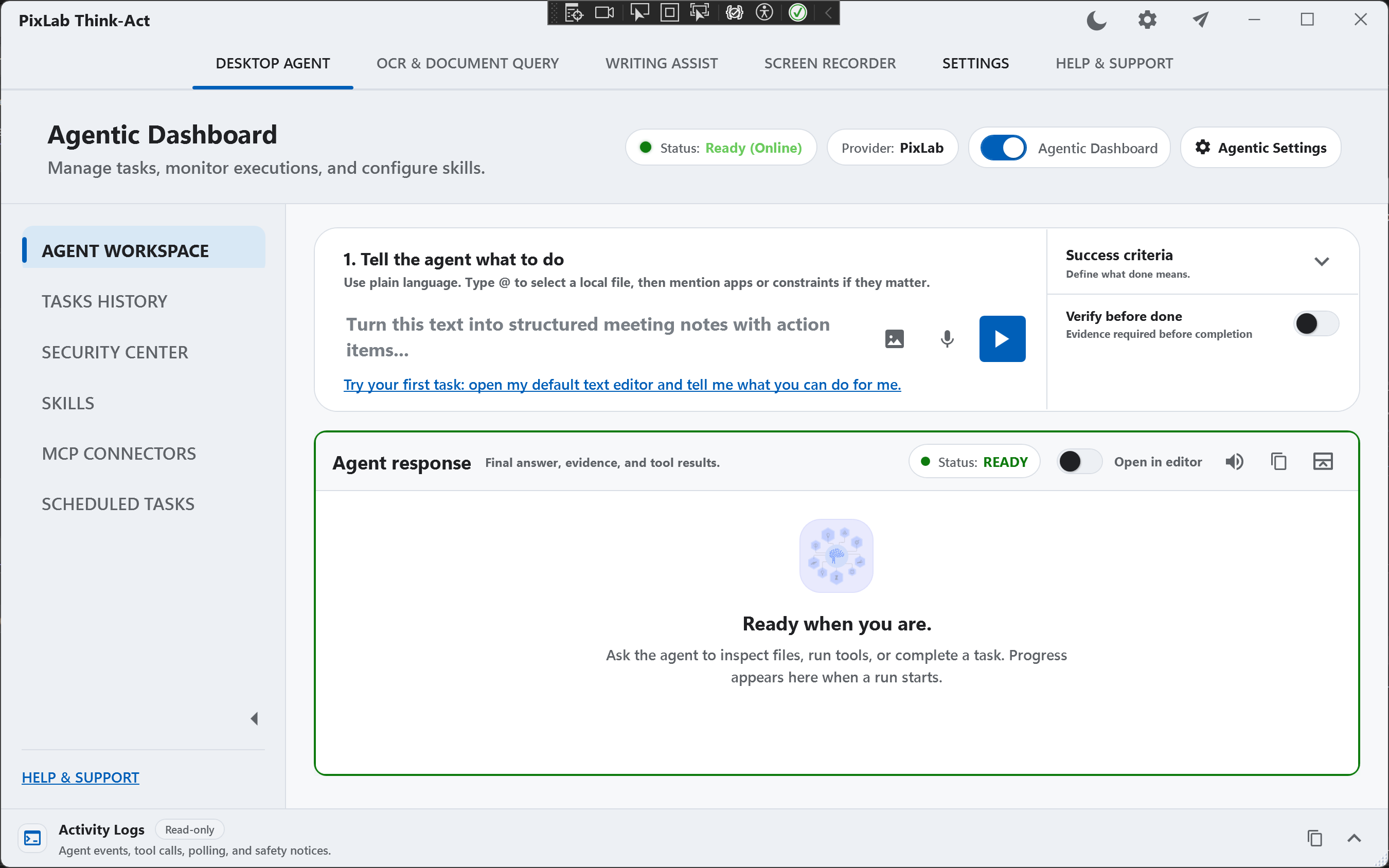
Unlike a traditional AI chatbot that lives inside a browser tab, Think-Act is designed around the work already happening on your computer: documents, screenshots, selected text, recordings, files, and desktop applications.

The goal is simple: give users a practical AI workspace that can understand context, use tools, reason about multi-step tasks, and help complete real work without constantly moving information between unrelated applications.

An AI Agent Built for the Desktop

Think-Act Screenshots

Think-Act combines several AI and productivity capabilities inside one Windows/Mac Native application.

The Desktop Agent can take a clearly defined task, work with the context you provide, use available tools and integrations, and coordinate multiple supported steps toward the requested result.

Instead of repeatedly copying information into an AI chat window, users can work directly with the material already in front of them.

Think-Act can use context such as:

  • Local documents and PDFs
  • Screenshots and images aided by built-in computer use tool
  • Selected text from desktop applications
  • OCR results
  • Screen recordings and transcripts
  • Files attached directly to a task
  • Enabled local tools and integrations

This makes Think-Act useful for workflows that extend beyond simple question-and-answer interactions.

Writing Assistance Directly on Windows

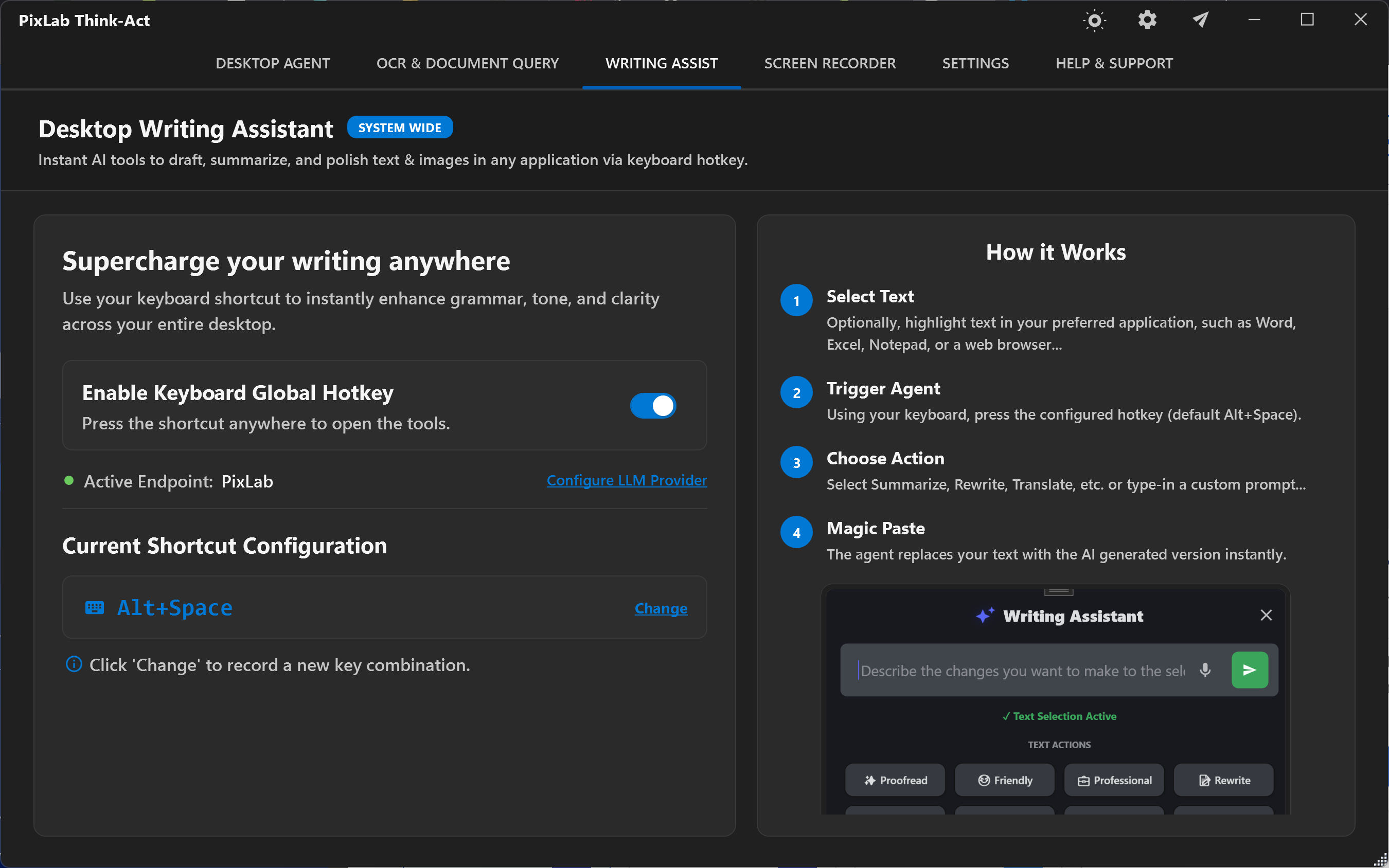
writing assist

Think-Act includes an integrated AI Writing Assistant for everyday writing tasks that is available system-side, and can be called from your everyday productivity software like Excel, Word, etc. using a global keyboard hot-key shortcut (defaulted to ALT+Space).

Users can select or provide text and ask Think-Act to:

  • Rewrite content
  • Improve clarity
  • Summarize long text
  • Translate content
  • Change tone
  • Structure rough notes
  • Draft new material

The writing tools can be used independently without launching a full agent workflow.

OCR and Document Intelligence

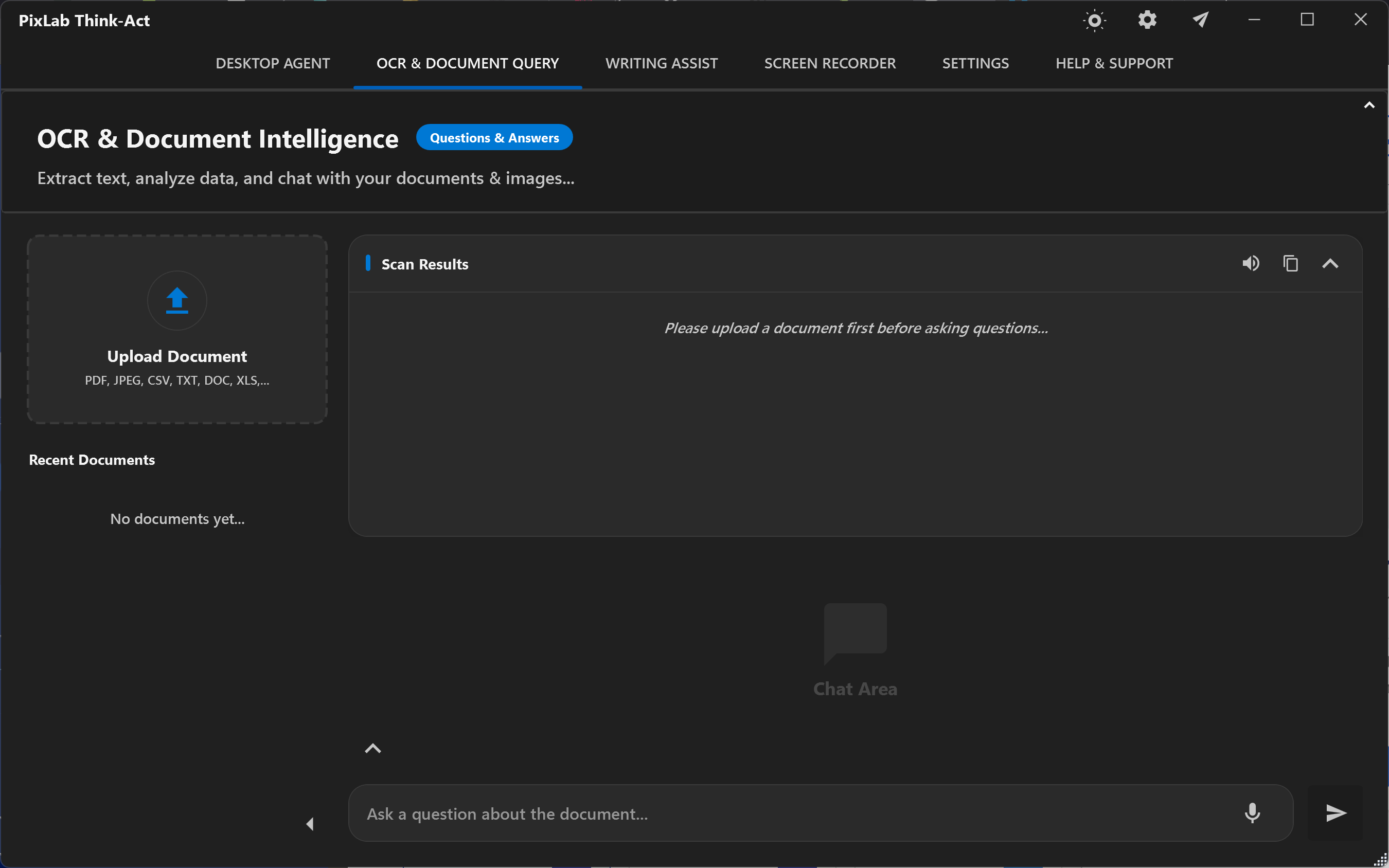
Documents are another major part of Think-Act Built-in OCR & Document Extraction capabilities.

OCR

The application can extract and analyze information from PDFs, screenshots, scans, and images using PixLab's document intelligence and OCR technologies.

Extracted information can then become context for another operation.

For example, a user can extract information from a scanned document and immediately use those results when preparing a summary, report, email, or agent task.

This keeps document processing and AI reasoning inside the same workflow.

Screen Recording and Workflow Context

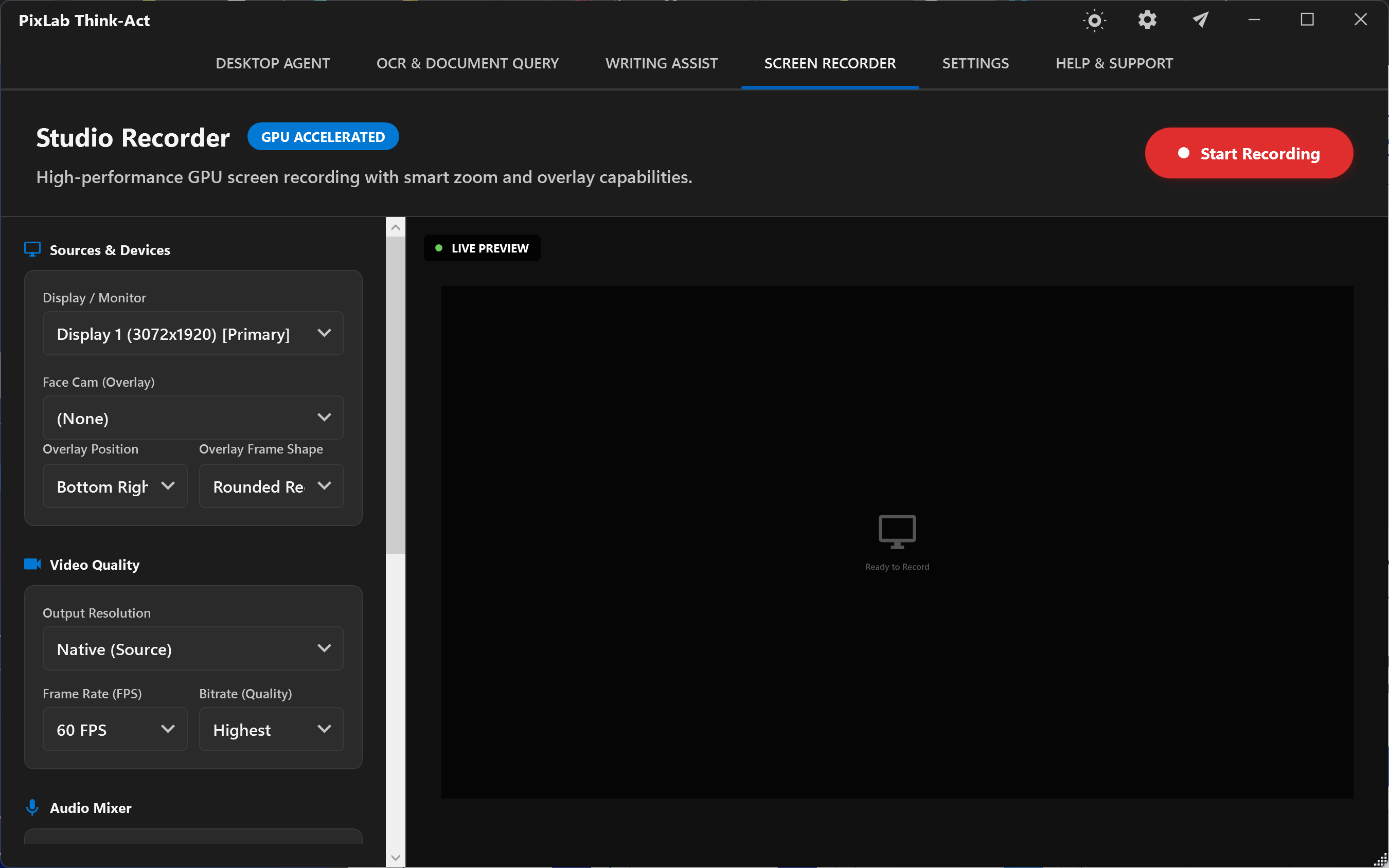
Think-Act also includes screen recording capabilities.

screen recorder

A recorded desktop workflow can be converted into reusable context, documentation, or the starting point for another AI-assisted task.

This is particularly useful for:

  • Recording procedures
  • Creating internal documentation
  • Capturing software issues
  • Preparing tutorials
  • Documenting recurring workflows
  • Building reusable processes

Local Skills and MCP Integrations

Think-Act supports the Model Context Protocol (MCP) for connecting compatible local tools and services.

skills Users decide which connectors are installed and enabled.
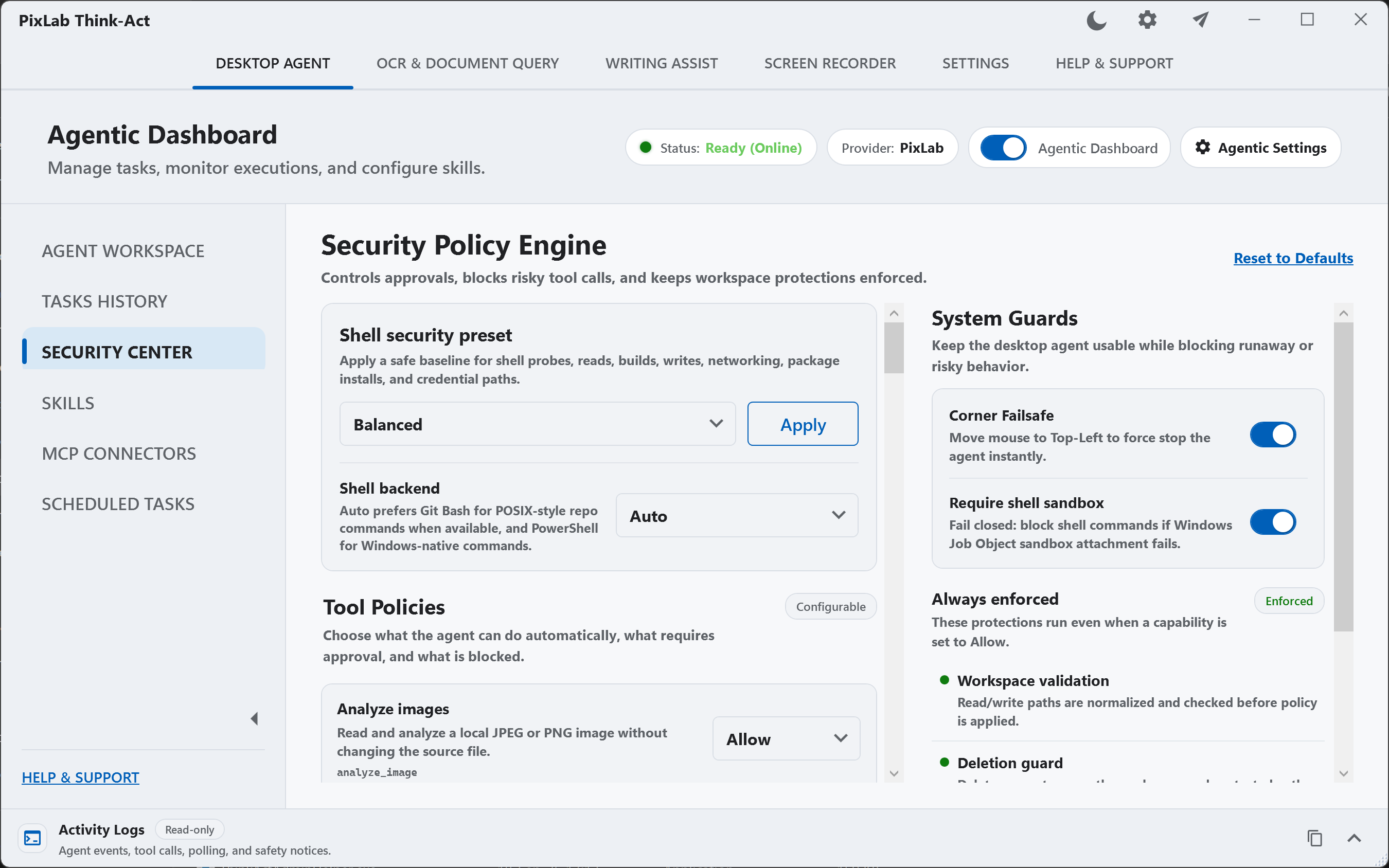
Think-Act also supports reusable local Skills, allowing useful workflows and instructions to be saved and applied again when similar work appears.

Skills describe how a task should be approached, while connectors provide access to external tools.

Together, they allow Think-Act to move beyond a general AI assistant toward repeatable desktop automation.

Built Around User Control

Agentic software needs clear boundaries.

security

Think-Act is designed around explicit tool availability, permissions, reviewable execution, and approval controls.

Depending on the configured policy, an action can be:

  • Allowed
  • Sent to the user for approval
  • Blocked

Users can inspect what happened during an agent workflow and review the final result before relying on it.

The objective is not to automate everything automatically.

It is to provide an AI desktop agent that can assist with meaningful work while keeping consequential actions under user control.

Think-Act for macOS Is Coming Next

Windows is only the beginning.

We are already developing a native macOS version of Think-Act, bringing the same desktop AI and agentic workflow experience to Mac users.

More information about the macOS release will be announced separately.

Download Think-Act for Windows

Think-Act is available now and free to install and try.

If your work regularly involves documents, writing, screenshots, OCR, desktop applications, repetitive processes, or multi-step AI tasks, Think-Act provides a new way to bring those capabilities together directly on your desktop.

Welcome to Think-Act.

World Lens Is Now Available on the App Store

World Lens is now live on the App Store for iPhone and iPad.

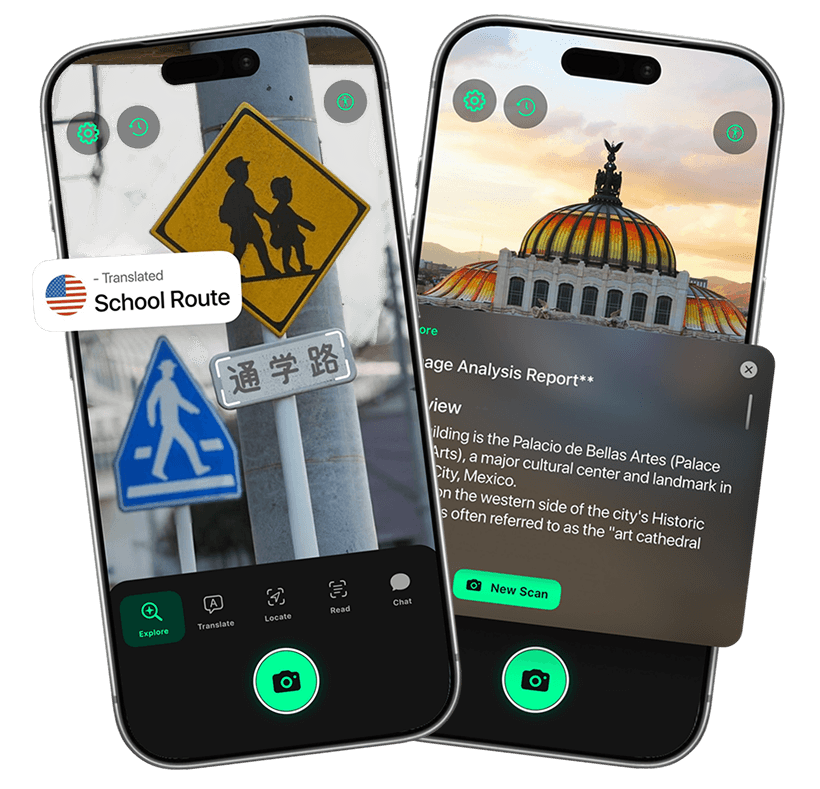
World Lens

Built by PixLab Mobile Team, World Lens is a camera-first visual search app designed to help people understand the world around them faster. Point your camera at an unfamiliar object, a menu, a street sign, a landmark, a product label, or a printed page, and World Lens helps you identify, translate, read, and explore what you see in seconds.

This release brings together object recognition, text translation, read-aloud OCR, place recognition, QR scanning, and follow-up visual chat in one polished iOS experience. Instead of jumping between multiple apps for search, translation, camera scanning, and accessibility support, World Lens brings those real-world tasks into one flow.

Official Links

What World Lens Does

World Lens turns your iPhone camera into a practical visual assistant for everyday life, travel, accessibility, and quick discovery.

With World Lens, you can:

  • Identify unknown objects around you
  • Translate signs, menus, labels, and printed text
  • Read real-world text aloud
  • Recognize landmarks and nearby places
  • Open supported place results in Maps
  • Scan QR codes and supported barcodes
  • Ask follow-up questions about what you just scanned
  • Analyze both live camera captures and images from your gallery

The goal is simple: move from seeing to understanding with as little friction as possible.

Built for Real-World Visual Search

Many camera apps handle only one narrow task. One app scans QR codes. Another translates text. Another tries to identify objects. Another reads printed content aloud. World Lens was built to combine those common visual tasks into a single iPhone app that feels cohesive and fast.

That means you can use the same app whether you are trying to:

  • figure out what an unfamiliar object is
  • understand text in another language
  • recognize a place while traveling
  • read printed content more easily
  • ask a follow-up question after a scan

World Lens is designed for the moments when you do not know exactly what you are looking at, what it says, or what to do next.

Key Features in the First App Store Release

Identify Unknown Objects

Point your camera at gadgets, tools, products, plants, signs, or everyday items and get fast, useful context. World Lens is built to help when keywords are unclear and manual search would slow you down.

Translate Text in Context

World Lens can translate text from menus, packaging, street signs, notices, labels, and printed pages. This makes it especially useful while traveling or navigating unfamiliar environments where speed matters.

Read Text Aloud

For users who want spoken assistance, World Lens can extract visible text and support read-aloud flows for signs, notices, labels, and printed material. This also makes the app more useful for accessibility-focused scenarios.

Recognize Places and Landmarks

World Lens can help identify nearby landmarks and places, then continue into Maps when supported. This makes it practical for city walks, tourism, local exploration, and everyday navigation.

Ask Follow-up Questions

A scan result is often only the start. World Lens includes scan-based chat so users can ask natural follow-up questions about what they just captured and get more context instead of stopping at a one-line answer.

Scan QR Codes and Barcodes

World Lens also covers fast utility scans. Open links from QR codes and detect supported barcodes without switching to a separate scanner app.

Use the Camera or the Gallery

The app is not limited to live capture. You can also analyze images from your photo library, which is useful when you want to revisit an image, check something later, or work from an existing screenshot or photo.

Why We Built World Lens

We built World Lens around a simple idea: visual understanding on mobile should feel more direct.

In everyday life, people constantly run into small moments of uncertainty:

  • What is this object?
  • What does this sign say?
  • Is this a landmark or local place?
  • Can I ask something more specific about what I just scanned?
  • Can I get this text read aloud quickly?

These are common camera-driven tasks, but they are often spread across too many separate tools. World Lens brings them together into a single experience that feels practical instead of fragmented.

Who World Lens Is For

World Lens is useful for a wide range of users:

  • Travelers who need help reading signs, menus, and labels
  • Students who want to understand objects, places, and printed content faster
  • Shoppers checking labels, packaging, and unknown products
  • Explorers learning more about places and landmarks around them
  • Accessibility-focused users who benefit from text reading and spoken output
  • Curious users who want a faster way to identify things around them

This is not a niche utility. It is a general-purpose visual tool for real life.

Available Now on iPhone and iPad

World Lens is now available on the App Store for iPhone and iPad.

If you want a faster way to identify objects, translate text, understand places, read printed content aloud, and ask questions about what you see, World Lens is ready to use today.

What Comes Next

This App Store release is the foundation for World Lens. We will continue refining the experience, improving scan quality, expanding visual understanding flows, and making the app more useful across travel, accessibility, education, and everyday discovery.

For now, the focus is clear: make it easier to understand the world around you with your camera.

Introducing DocScan for iPhone and iPad

The PixLab Mobile-Hub Team is pleased to announce the release of DocScan, PixLab’s all-in-one mobile document scanner for iPhone and iPad.

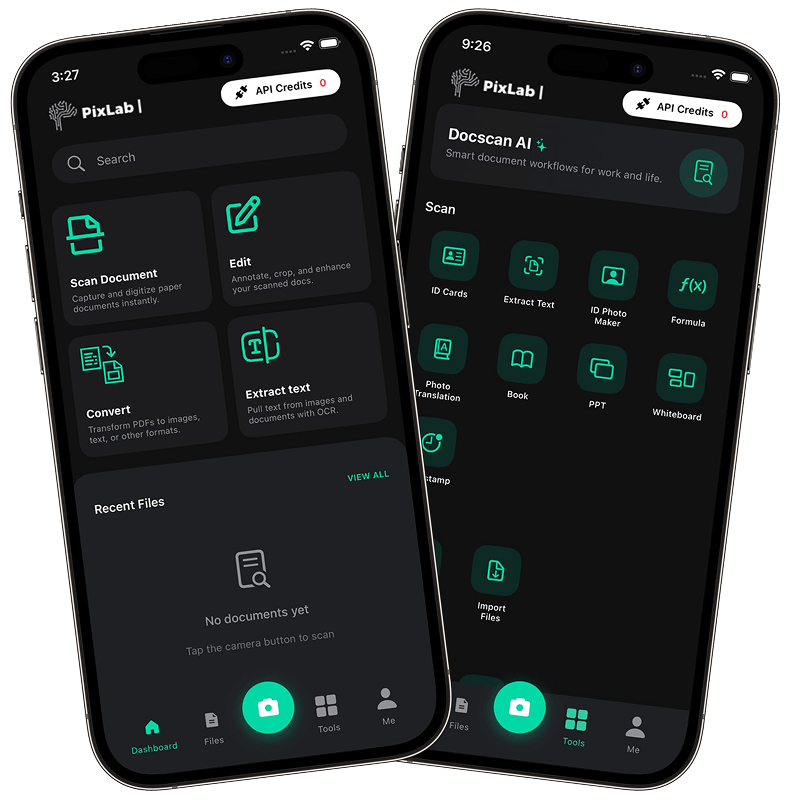
docscan ios

DocScan for iOS is built for people who need more than a basic camera capture. It helps you scan, read, structure, search, and reuse real-world documents directly from your mobile device. Whether you're working with handwritten notes, receipts, invoices, ID cards, menus, signs, or multi-page documents, DocScan for iOS turns raw scans into useful, structured output.

Download DocScan on the App Store

Scan, read, and use your documents faster

Most scanner apps stop after taking a picture. DocScan app goes further by understanding document content and helping you turn it into something actionable.

With DocScan for iOS, you can:

  • Scan handwritten notes and turn them into searchable text
  • Extract structured data from receipts and invoices
  • Capture and enhance ID documents with dedicated scanning tools
  • Use built-in document chat to ask questions about scanned pages
  • Export results to PDF, Markdown, JSON, and CSV
  • Build multi-page documents for archiving, sharing, or downstream workflows

Key features

Two-pass recognition

DocScan uses a two-pass recognition workflow. On-device OCR runs first for speed, then a cloud pass powered by DOCSCAN API improves difficult text when needed. This helps the app handle everything from rushed handwriting to noisy thermal receipts with better reliability.

Built-in document chat

Instead of reading through long pages manually, you can ask questions about what you scanned. Need a summary, a total amount, an expiration date, or a key detail from a contract or receipt? DocScan for iOS helps you get answers faster.

Handwriting scanning

DocScan for iOS is built to handle handwriting that basic OCR often misses, including cursive, shorthand, mixed scripts, and rushed writing. It is especially useful for notes, study material, research pages, and brainstorming sketches.

Receipt and invoice extraction

Thermal receipts and invoices rarely follow one format. DocScan for iOS extracts useful fields like vendor name, dates, totals, taxes, and line items so your scans are ready for accounting, reporting, or automation.

ID document capture

Passports, driver’s licenses, insurance cards, and other important documents need more than a simple photo. DocScan for iOS includes dedicated capture tools with glare reduction, edge detection, contrast tuning, and structured field extraction for cleaner results.

Signs, menus, and everyday document scanning

DocScan for iOS also works well on the go. Scan signs, notices, flyers, menus, and business cards, then search, translate, copy, or save the extracted content.

Flexible export formats

Scanned content should not stay trapped inside an app. DocScan supports export to:

  • PDF
  • Markdown
  • JSON
  • CSV

This makes it easier to archive scans, send them to teammates, move them into spreadsheets, or plug them into internal tools and automated workflows.

Built for real-world use

The DocScan mobile app is designed for people who work with documents every day, including:

  • Students and researchers digitizing handwritten notes and study material
  • Freelancers and small businesses capturing receipts, invoices, and contracts
  • Travelers saving IDs and reading signs or menus abroad
  • Developers and integrators building scanning and OCR into their own apps

Powered by the PixLab DOCSCAN API

One of the most important things about DocScan for iOS is that its scanning capabilities are powered by the PixLab DOCSCAN API.

That means the same engine behind the mobile app is also available to developers who want to add production-ready document scanning, OCR, KYC extraction, receipt ingestion, and structured document workflows to their own products.

If you’re building your own app, service, or internal platform, you can start integrating the same API that powers DocScan for iOS:

Available now

DocScan for iOS is now available on the App Store for iPhone and iPad.

  • Homepage: https://pixlab.io/mobile-apps/docscan-app
  • App Store: https://apps.apple.com/us/app/docscan-all-in-one-scanner/id6758423983

We built DocScan for iOS to make mobile document work faster, more intelligent, and more useful from the moment you capture a page. We’re excited to see how users and developers put it to work.

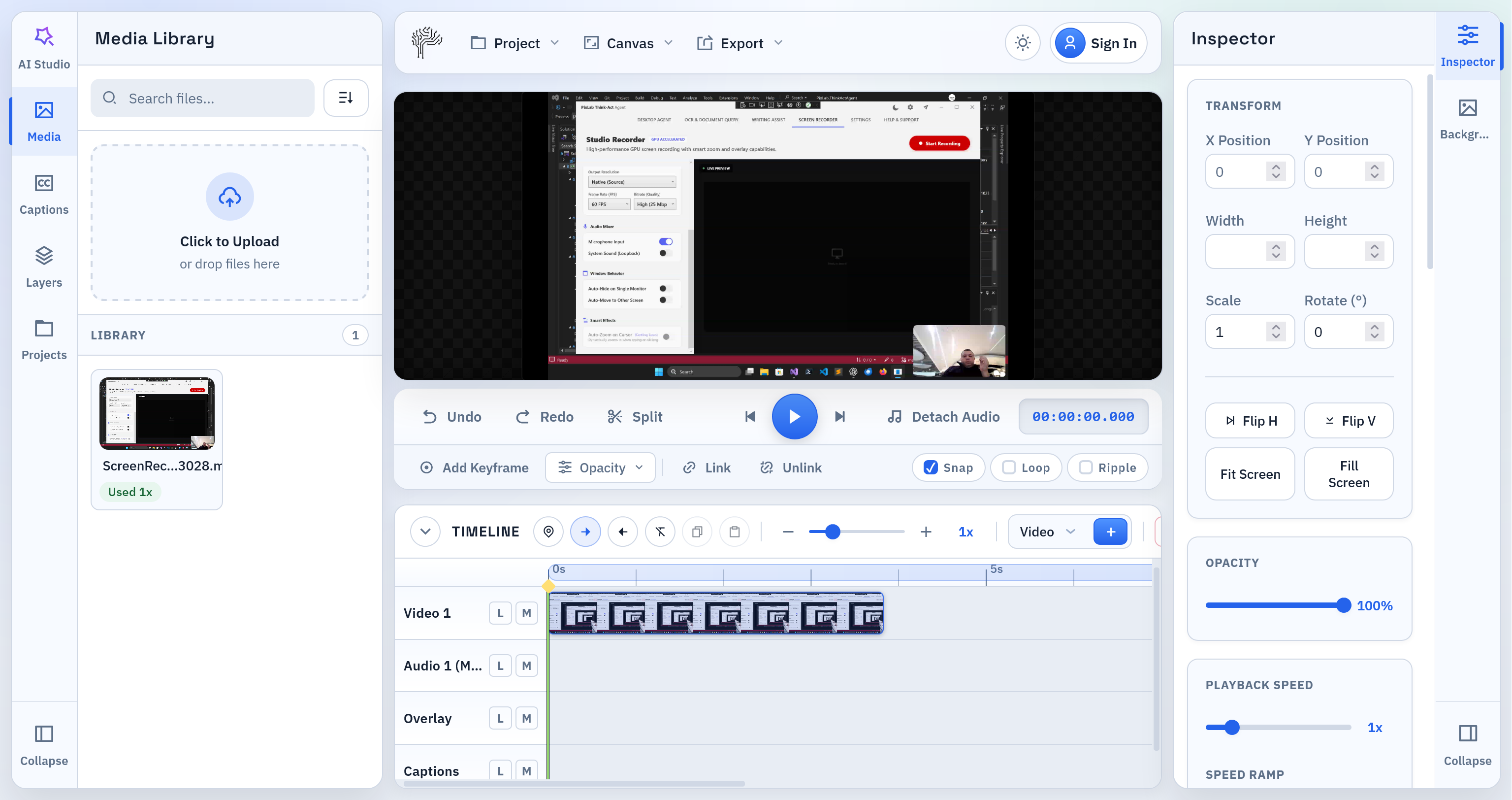
PixLab Video Editor Update: Better VFX, Smarter Text Overlays, and a Faster Editing UI

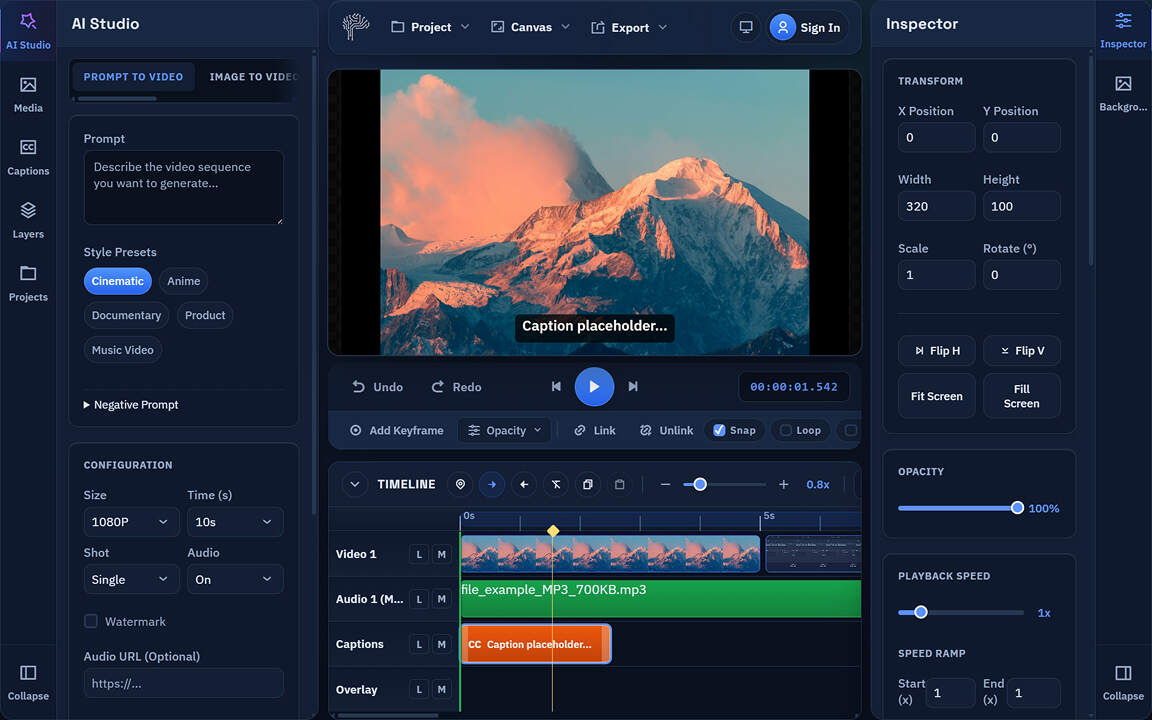
video UI

PixLab's Online Video Editor backed by WASM/WebGPU & WebAudio technolgies has reached an important milestone. The app now delivers a much stronger browser-based editing experience with a cleaner interface, smoother playback, better text tools, and a growing visual effects stack designed for short-form video work.

This update focuses on the fundamentals that matter most when people are editing Reels, Shorts, stories, and other fast-turnaround videos. The result is a video editor that is easier to use, more reliable on the timeline, and much more capable for creators who want polished output without installing desktop software.

You can try the editor here:

A Cleaner UI Built for Real Editing

The editing interface has been redesigned to reduce friction and keep the most important tasks obvious.

pixlab video editor

The current UI improvements include:

  • a more polished workspace layout
  • clearer separation between media, AI Studio, canvas, timeline, inspector, text, and effects
  • a simpler path for importing video, making edits, and exporting
  • a more focused right-side editing panel so text controls and effects no longer clutter the main inspector

The goal was straightforward: make it easier for a user to open a clip, make changes quickly, and export without fighting the interface.

New Text Overlay Workflow

Text overlays are now a real editing feature, not a basic add-on.

The editor now includes:

  • a dedicated Text tab for overlay creation and editing
  • direct text positioning on the canvas
  • better text styling controls
  • text background shapes
  • transparent text background support
  • stroke controls
  • custom font upload
  • live preview updates while editing

This makes PixLab much more useful for the kind of content people actually publish every day, including subtitles, hooks, lower thirds, title cards, and callout overlays.

Text Animation Presets

Text is no longer static by default. The editor now supports animation presets for overlays and captions, giving creators a faster way to add movement without manual keyframing.

Available animation presets include:

  • Fade
  • Pop In
  • Bounce
  • Slide Up
  • Type On

These presets are especially useful for short-form video where timing, emphasis, and readability all matter in the first few seconds.

Custom Fonts for Brand and Style Control

PixLab Video Editor now supports local custom font uploads for text overlays.

That means creators can:

  • use branded typography
  • match client visual identity
  • avoid being locked to a generic default font stack

Fonts stay local to the browser workflow and are tied into project persistence so users can continue editing with the same look and feel later.

New VFX and Effects Controls

The editor now includes a dedicated Effects workspace for clip-level visual adjustments and future VFX expansion.

The current effects set includes:

  • brightness
  • contrast
  • saturation
  • hue rotate
  • blur
  • sepia
  • grayscale
  • vignette
  • sharpen

There are also quick presets for faster grading and look development:

  • Clean
  • Punchy
  • Cinematic
  • Noir

These effects are designed for practical video editing use cases rather than novelty. They help creators clean up footage, push style quickly, and get to a better result without leaving the browser.

Crop Controls for Social Video Framing

Basic crop controls are now included for video and image clips. This is important for adapting footage to short-form layouts and tighter compositions without forcing users into a full layout rebuild.

Combined with text overlays and canvas positioning, crop support makes it much easier to repurpose source footage for vertical and mobile-first formats.

A Better Timeline for Everyday Editing

The timeline has been significantly improved with a focus on simple, high-frequency actions.

Recent timeline improvements include:

  • stronger trim behavior for clip starts and ends
  • easier-to-grab trim handles
  • a floating mini toolbar directly on selected clips
  • trim start to playhead
  • trim end to playhead
  • split at playhead
  • direct visual trimming on the timeline
  • live trim feedback while dragging
  • double-click edge trimming to the playhead

These changes make the most common cleanup tasks much easier, especially when removing the first few frames after hitting record or trimming the tail of a clip before export.

Linked Audio and Detach Audio Improvements

Audio handling on the timeline has also improved.

The editor now supports stronger linked clip behavior for video and detached audio, including:

  • linked move
  • linked trim
  • linked split
  • linked delete
  • safer detach audio behavior

This helps the timeline behave more like a professional editor and reduces the friction of common editing operations where video and audio need to stay aligned.

Smoother Playback and More Reliable Canvas Preview

Playback was another major focus in this update. The canvas preview is now smoother, and audio playback is more stable thanks to better browser-side handling.

Behind the scenes, the editor now benefits from:

  • improved media hydration when projects are reopened
  • better handling of stored media assets
  • smoother timeline updates during playback
  • improved audio sync using a stronger playback path

This matters because creators need to trust what they see and hear before they export.

Export and Project Handling Improvements

The export path has been hardened so the editor behaves more reliably on real projects.

Recent improvements include:

  • better asset persistence
  • safer project save and reload behavior
  • improved export handling for repeated media usage
  • stronger frame seek behavior during export
  • better handling of audio volume during export

These changes reduce the gap between preview and final output and make the editor safer to use on actual production work.

AI Studio Is Ready for the Next Phase

The AI Studio area in the interface is already in place and prepared for the upcoming backend integration. The current work has focused on making the core editor strong first, so that generated clips can drop into a workflow that already feels complete.

That means when AI video generation is fully connected, users will not be landing in a weak editor shell. They will be landing in a real browser-based video editor with text, effects, timeline controls, audio tools, and export already working together.

What This Update Means

This release is about maturity.

PixLab Online Video Editor is becoming a more capable short-form editing environment all for free with:

  • better usability
  • stronger playback
  • improved export reliability
  • richer text tools
  • a dedicated effects pipeline
  • cleaner editing workflows

If your work involves browser-based video editing, short-form content production, captions, overlays, or quick social edits, this update makes PixLab meaningfully more practical.

Try It

Open the app:

Learn more:

Read the tutorial:

More updates are coming, including backend-powered AI generation and a stronger AI jobs workflow. For now, the core editing foundation is in much better shape and ready for the next phase.

Introducing fio.js 3.0: A Quantum Leap in Facial Authentication UX & Performance

FACEIO Landing

At FACEIO, we believe that security shouldn't come at the cost of user experience. Today, we are thrilled to announce the immediate availability of fio.js 3.0, a massive overhaul of our client-side facial authentication widget.

This update isn't just a patch; it is a complete reimagining of how users interact with biometric security in the browser. We’ve rebuilt the rendering engine, polished the UI to a mirror shine, and hardened our security heuristics—all while handing more control back to developers.

Here is what’s new in version 3.0.

1. Intelligent Visual Guidance & Responsive UX

The days of ambiguous, static loading screens are over. We have introduced a new Smart Focus System designed to guide users intuitively.

  • Active Engagement: If a user looks away or the face isn't clearly visible, the interface gently transitions into a "Searching" mode to signal that the system is active but waiting for input.
  • Dynamic Feedback: A smooth, animated scanning effect cycles through calming colors (Green, Cyan, Sky Blue, and Orange) to guide the user's attention back to the camera frame without being startling.
  • Modern Visual Cues: We’ve replaced standard bounding boxes with stylish Neon Tech Brackets that glow and change color to provide instant, clear feedback on proximity and recognition status.

2. Enhanced User Freedom: The showAbortBtn Parameter

We understand that sometimes, a user might start an enrollment process and decide to stop halfway through. To improve user agency, we've introduced the showAbortBtn parameter.

  • Total Control: By setting showAbortBtn: true in your enroll() configuration, you can choose to make the close (X) button visible throughout the entire interaction.
  • Graceful Exit: If a user clicks this button, the operation terminates immediately, and the Promise is rejected with the specific fioErrCode.ABORTED_BY_USER (Error Code documented here).
  • Better Flow: This allows your application to handle voluntary cancellations distinctively from timeouts or network errors, enabling smooth UI transitions back to your main app.

3. Glassmorphism & Typography Overhaul

The UI has received a significant facelift to match modern design trends:

  • Glassmorphism Notifications: Status messages (like "Move Closer" or "Look at Camera") now float in elegant, semi-transparent glass bubbles with neon accents.
  • Crisp Typography: We've standardized on the Montserrat font family for all canvas elements, ensuring legibility and a consistent brand look across devices.
  • Haptic Feedback: On supported mobile devices, users now feel a subtle vibration when interacting with the PIN pad, adding a tactile layer to the digital experience.

4. 60 FPS Buttery Smooth Rendering

We have completely decoupled the Detection Logic from the Rendering Loop.

  • Throttled Detection: Heavy WASM (WebAssembly) detection now runs at an optimized ~25 FPS to save CPU cycles.
  • High-Speed UI: The visual interface renders at a native 60 FPS.
  • The Result: No more lag or stuttering, even on older mobile devices. The video feed remains fluid while the AI does the heavy lifting in the background.

5. Smart "Virtual Camera" Detection

Security is paramount. fio.js 3.0 introduces a new Heuristic Scoring System to detect presentation attacks. It analyzes frame rate patterns, and driver behaviors to block virtual cameras attempting to spoof the system, without penalizing legitimate users who have complex audio/video setups.

Coming Soon: Background Face Filtering

We are already working on the next big leap: Intelligent Multi-Face Filtering.

In busy environments (offices, coffee shops), people walking in the background often trigger "Multiple Faces Detected" errors. The upcoming update will feature a smart depth-and-focus filter that ignores background passersby and locks exclusively onto the active user in the foreground. Stay tuned!

Get Started

The new update is live and automatically available to all users pointing to our CDN. You don't need to change a single line of code to benefit from the performance upgrades, though we recommend exploring the new parameters to tailor the UX to your needs.

There has never been a better time to add facial authentication to your web application. Try out fio.js 3.0 today and give your users the secure, seamless experience they deserve.

PixLab & FACEIO Pricing Update: Clearer Plans, Better Value, More Power 🚀

We’ve just rolled out an important pricing update across PixLab and FACEIO, and it’s one we’re genuinely excited about. The goal is simple:

make our plans clearer, fairer, and better aligned with how developers, teams, and businesses actually use our products.

If you’ve been using PixLab or FACEIO or thinking about it, this update is for you.

Pricing Update


Why We Updated Our Pricing

Over time, PixLab and FACEIO have grown from individual APIs into full AI platforms used in production by developers, startups, and enterprises worldwide.

Our previous pricing tiers were functional, but they didn’t fully reflect:

  • The maturity of the products
  • The real value delivered at each level
  • The different needs of individuals vs. businesses vs. enterprises

So we redesigned the pricing ladder to be:

  • More intentional
  • Easier to understand
  • Better at guiding users to the right plan

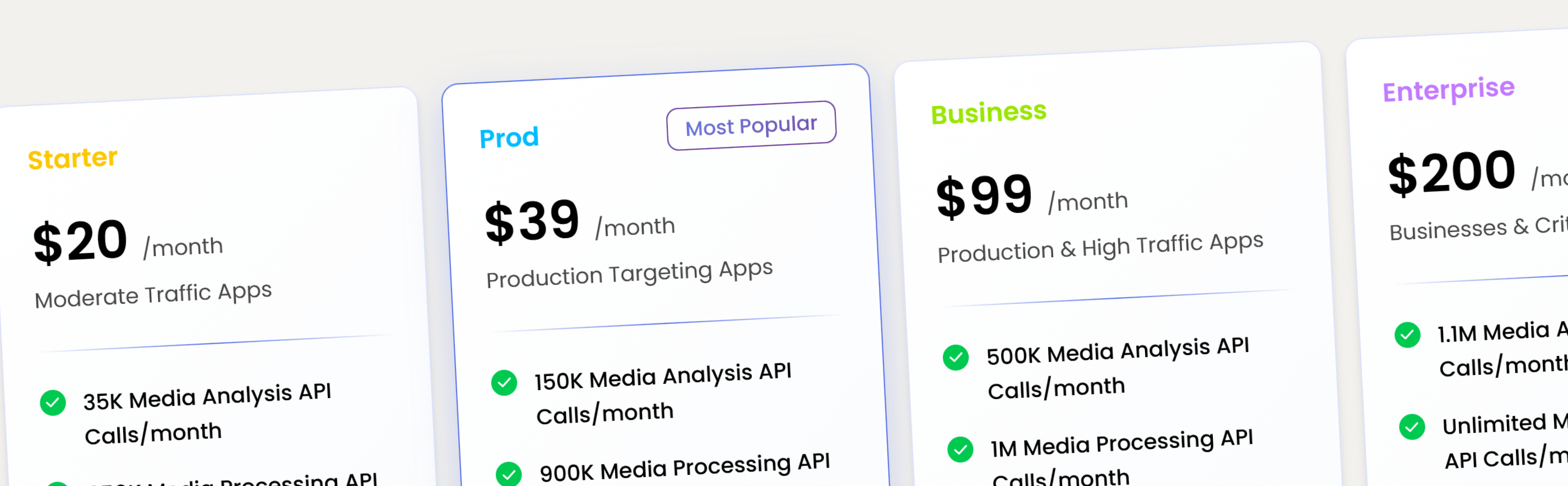
The New Pricing Plans

Here’s the updated pricing for both PixLab and FACEIO:

Plan Price Best for
Starter $20 / month Developers getting started, testing, small projects with moderate traffic
Pro $39 / month Serious individual users and small teams with high traffic
Business $99 / month Production workloads and growing companies
Enterprise $200+ / month High-scale, compliance, and custom needs

Each step represents a real jump in capability, not just a cosmetic upgrade. View full pricing details:


Why This Pricing Works Better

Each tier now has a clear purpose. No confusion. No overlap:

  • Starter → moderate traffic apps, and early usage
  • Pro → daily, production ready, serious usage
  • Business → production and team workflows
  • Enterprise → scale, compliance, and support

What This Means for You

If you’re already a user:

  • You now have clearer upgrade paths
  • Better alignment between price and features
  • Plans that grow with your usage

If you’re new:

  • You can start at $20 with confidence
  • Upgrade only when you actually need more power
  • No artificial complexity or hidden traps

Try the New Plans Today

Whether you’re building:

  • AI-powered apps
  • Face authentication systems
  • OCR and document workflows
  • Computer vision pipelines
  • Enterprise-grade AI solutions
  • Content Creation & Visual Marketing via BG-REMOVE and TXT-REMOVE APIs

The new PixLab and FACEIO plans are designed to support you from first experiment to full production. Get started now:

PixLab

FACEIO


Final Thoughts

This pricing update isn’t about charging more.
It’s about pricing honestly, supporting growth, and building long-term trust.

As always, thank you for building with PixLab andFACEIO. 💙